

HEA.
Alright, let’s do this.

I don’t think of myself as a trustworthy writer. My characters surprise me, and I try to pass that element of surprise on to my readers. I love it when my characters act in ways that make you want to throw the book at the wall. I’m always looking for an opportunity to throw in a plot twist or two. But the one thing you can always predict is what all romances promise. At the end of the book, the couple will end up together.
When I see online discourse about this concept, it makes me think there’s a fundamental misunderstanding of the thematic work that a happily-ever-after (HEA) accomplishes. It becomes an argument that looks like a debate, but isn’t. Romance authors and readers who live within the genre are talking about reader expectations and commercial market categories. Readers who think of romance as any book with a prominent romantic relationship are focused on the plot. It’s hard to engage in a productive conversation when the two sides aren’t talking about the same thing.
I’ve always thought of genre as a set of expectations. While the way those expectations are realized can change over time, in broad terms, stories that present themselves to the reading public as mysteries, thrillers, horror, and romance should align with a general understanding of those categories. Horror scares people. Mysteries are puzzles that have to be solved. Romances are about people falling in love. Our expectations play a huge role in how we experience stories and often, whether we enjoy them. Genre labels are a communication system that signals how to engage with a story. If I pick up a book that’s marketed as fantasy, I focus on world-building, magic systems, and political intrigue more than when I read a horror or a thriller. When I pick up a romance, I focus on the romantic tension between the couple and the evolution of that relationship. With literary fiction, even if there’s a love story at its center, I’m less focused on the outcome of the relationship than on what the relationship reveals about the characters.
All that to say, if you write a book that’s a romance novel in every way except that the couple doesn’t end up together, there’s a good chance I’ll feel like I wasted my reading time. That illustrated cover and romance label made me look left when I should have been looking right.
Here’s another way to think about it. The core promise of genre romance is that love is the key to happiness. If someone were to ask me what makes a story a genre romance, that’s what I would say. The core concern of this book is the couple’s journey toward proving that thematic argument. When the character breaks up at the end, you’re saying something different. Maybe you’re saying love is a bump on the road to happiness. Or having loved (past tense) is part of what makes us who we are. Maybe love is part of a coming-of-age story that ends with the main character being a better version of themselves. All of those are valid, interesting thematic concerns I’ve enjoyed reading. What I don’t enjoy is being fed a surprise, unhappy ending like a hidden layer of Brussels sprouts at the bottom of my ice cream sundae.
(I actually love Brussels sprouts. Here’s one of my favorite recipes.)
Superheroes Don’t Get This Kind of Heat
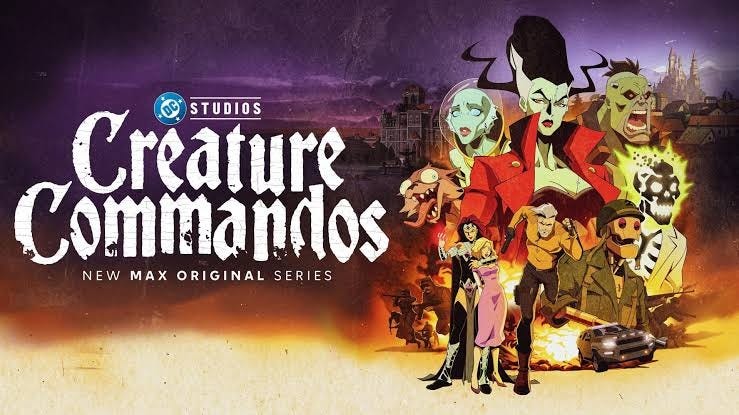
People who watch Marvel or DC movies know the hero will defeat the villain at the end, but they watch them anyway. That’s a fundamental expectation of the superhero genre. But then you have shows like The Boys, which refuses to distinguish between heroes and villains. It’s not a superhero show. It’s a show about superheroes. It knows what a superhero story looks like and defies those assumptions. But to do that, the core genre rules have to exist. If there were no stable, accepted definition of what a superhero story looks like, it would just be another sci-fi/fantasy show.
A book that follows all the expected beats of a genre romance but subverts the happy ending isn’t a genre romance. It’s a critique of those happy endings. It’s in conversation with the expectation that choosing love is always the answer. It may use the genre’s framework to say something interesting about the way our culture centers romantic love as the ultimate accomplishment. But it doesn’t redefine the genre itself.
And honestly, I’m not sure anyone actually wants that. I think we all want our work to be read and understood. I don’t think anyone wants to be told their work is predictable, but I don’t think predictability is what’s actually happening when a book conforms to a genre. A predictable book can be skimmed. It lacks the specificity in execution that unique stories have. A unique voice, a fresh take on the familiar, and an expansion of the genre to include historically marginalized voices are things that make a book memorable, regardless of how it ends.
Words Worth Keeping
Genres are a funny little concept, aren’t they? In theory, they have a simple definition that’s easy to understand, but in practice, well, some may feel confined.
Linda Martell
What’s the last romance-adjacent book you read? What’s the last romance book that surprised you in a good way?
Me, outside:
If you’re in the St. Louis area, I’ll be chatting with Tia Williams about The Missed Connection at Novel Neighbor on Friday, June 26th. You can register for the event here.
Next, I’ll be in Columbus, OH, for the Columbus Book Festival on July 11th and 12th.
In September, I’ll be at the Petersburg Book Festival in Petersburg, VA.
And in October, I’ll be at my hometown book festival, Six Bridges, moderating a few panels.
Books I’ve read and enjoyed recently:
The Summer Girlfriend by Kristina Forest
A fake summer fling between a stand-in girlfriend and a handsome business heir becomes way too real in this glittering new romance. Read if you miss how you felt watching You, Me, and Tuscany.
Score by Kennedy Ryan
A scorching second-chance romance between a talented screenwriter and a phenomenal musician. Second chance is my favorite trope of all time, and no one does it like Kennedy.
On Witness and Respair by Jesmyn Ward
The collected creative nonfiction of a singular American writer, Jesmyn Ward, including widely shared classics, three never-before-published speeches, and an introductory essay. This is my current read, and I already know it’s going to be one of my favorites of the year.
Also enjoying:
The new Olivia Rodrigo album.
That Harlan Corbin series that’s basically The Fugitive.
The Doux Bananas X-Treme Hold Hair Gel, because they added a pump, and I don’t have to fight for my life to get it out of the bottle anymore.
The Craft productivity app, which I started using instead of Notion as a hub for my books, because I realized that I needed something more aesthetically pleasing when I’m being creative.
Retweet repost write it in the sky tattoo it on the back of everyone's eyelids!!!
Yes! Bow howdy did I get an education after I remarked that I enjoyed Verity :-/ A friend schooled me about the romance genre rules and how the readers' trust had been betrayed. It's one of those books that gets thrown across the room by many.
I liken the genre to blues music. Can I predict what chord is coming up next? Maybe. Probably. But there's a satisfaction when it happens and different artists make it happen in different ways which is a beautiful thing. And there's a comfort food quality to that.